
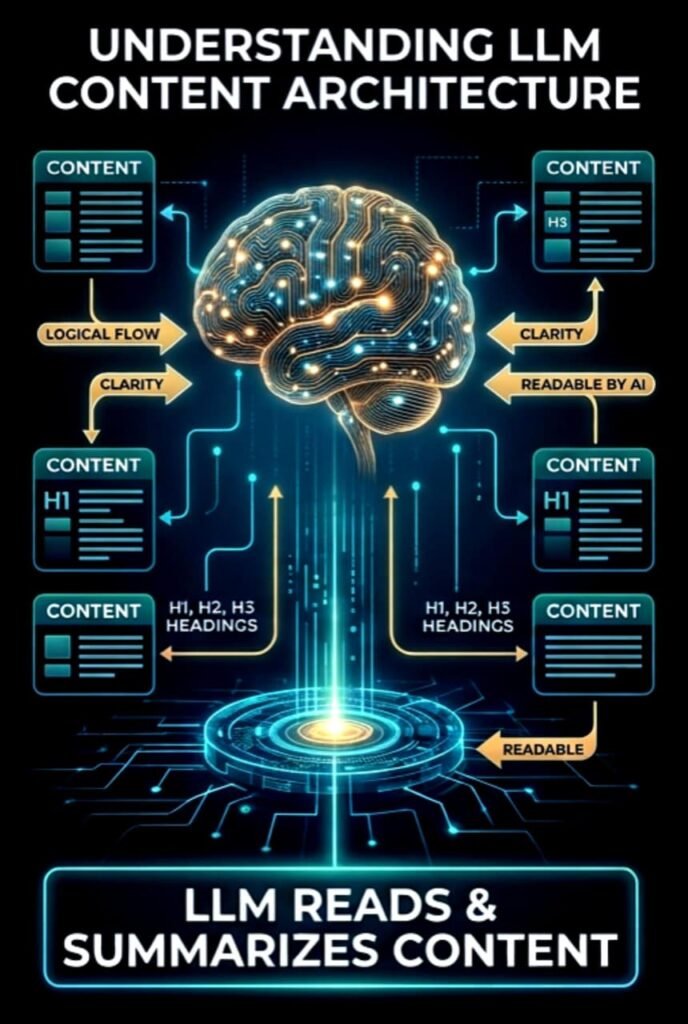
Learn how to make your website easy for LLM-Friendly Content Architecture to understand. Get tips on how to structure your website, use schema, and create content that AI systems can easily read and understand.
If you have been working on LLM-Friendly Content Architecture for a while now, you have probably seen that things are changing. The old methods are still okay. There are not enough anymore.
Modern AI models and search engines like Google do not just look at a page. They try to understand what the page is about, how it is set up, and what is going on around it. That is why making content that is easy to read and understand has become a part of making your website show up in search results.
I started looking into this when I was learning more about search that uses intelligence.It became clear quickly that just because your website shows up near the top in Google it does not mean that AI tools will get what your page is about or be able to summarize it correctly.This made me want to learn more about how to set up content so that both search engines, like Google and AI systems can understand LLM-Friendly Content Architecture correctly.I wanted to figure out how to make LLM-Friendly Content Architecture work well for both people and machines.
What is LLM-Friendly Content Architecture?
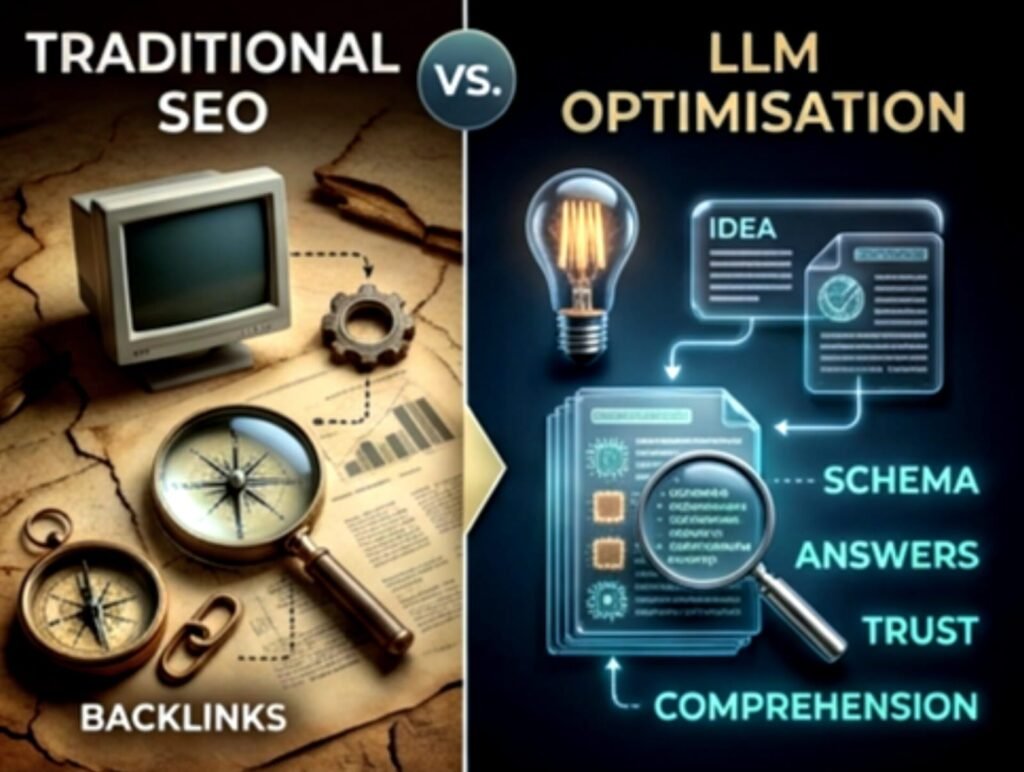
LLM-Friendly Content Architecture is setting up a page so both humans and AI systems can follow it easily. You are not just writing for keywords anymore. You are writing for clarity and logical flow because that is what AI models are built to understand. This does not replace traditional SEO. It builds on it. Want to see how we approach SEO from the ground up?
Why Traditional AI-friendly content structure Alone Is Not Enough
Search engines used to reward keyword relevance and backlinks. AI tools work differently. People look at the answers they make a version of the sections, and they decide if the information is good and easy to follow. You can have a page that has all the words, but it will still not do well with a computer search if it is messy or has a lot of extra stuff. That is really the shift: you are no longer optimising only for an algorithm. You are optimising so that AI systems can actually understand what you have written. Check out our homepage. You still need the basics. Structure and comprehension matter as much as keyword placement—now maybe even more.
My Framework for LLM-Friendly Content Architecture Optimisation
When I restructure a page for LLM-Friendly Content Architecture readability, I work through these in order.
1. Heading Structure First
Headings need to follow a hierarchy, not just look nice.Each heading should represent its subtopic, and subheadings should break that topic down further where needed.
2. Make It Scannable
Use paragraphs, bullet points and numbered lists. This helps both readers and LLM-Friendly Content Architecture tools quickly identify the important information.
3. Use Schema. Front-Load the Answer
Place the main answer within the first few sentences of the page. This makes it easier for LLM-Friendly Content Architecture to extract and summarise your content accurately. The order matters. Structure comes first. You cannot rely on schema markup to fix a page that is poorly organised.
The Mistakes That Actually Hurt LLM-Friendly Content Architecture Visibility
One of the mistakes I keep seeing is people obsessing over keywords while completely ignoring structure.With much LLM-Friendly Content Architecture-generated content flooding the internet, many pages are published without proper editing, heading hierarchy or a clear answer near the beginning.The result is content that may technically target the keywords but is genuinely difficult for LLM-Friendly Content Architecture tools to understand.A wall of text with no structure causes more problems than missing keywords.
How to Actually Test If Your Page Is LLM-Friendly Content Architecture Readable
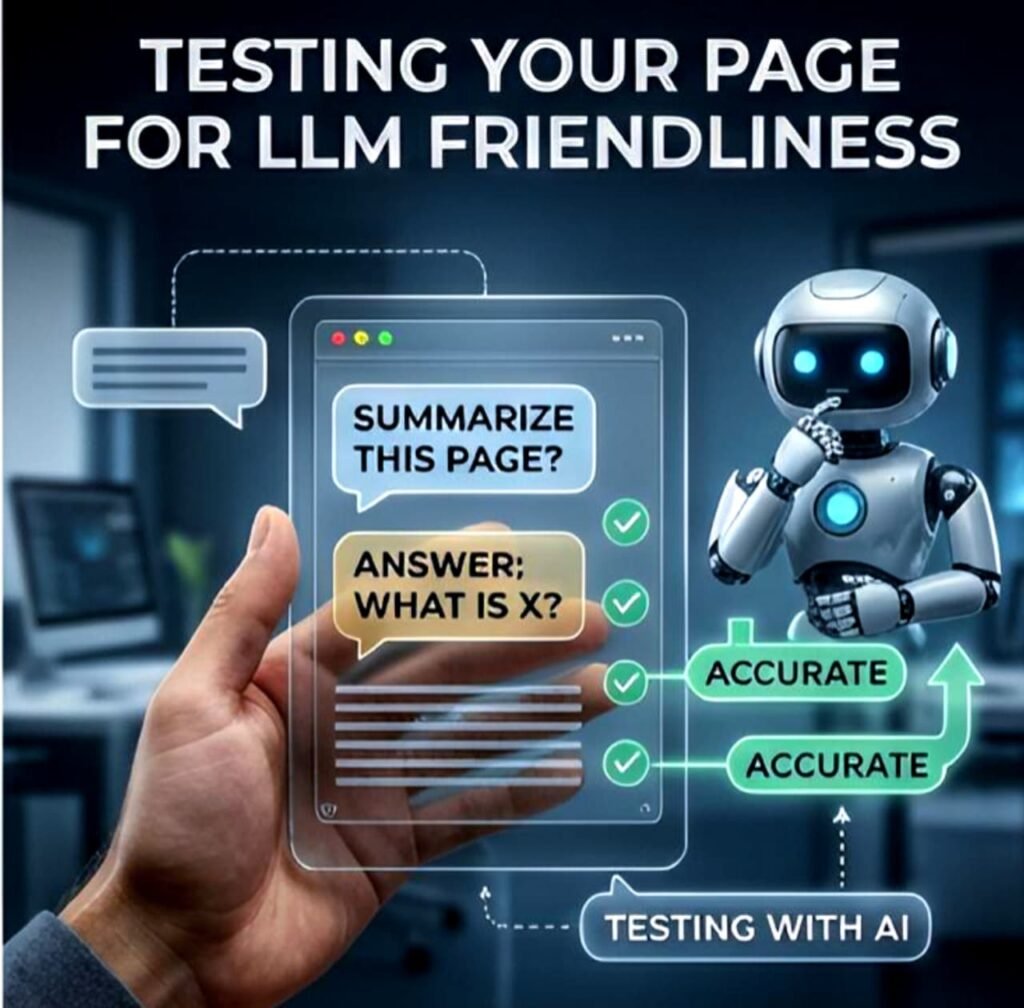
You do not necessarily need tools.The simplest method is to ask an LLM-Friendly Content Architecture tool to summarise your page or answer a question using your page as the source.If the response is accurate, your structure is probably working well.You can also run your page through an LLM-Friendly Content Architecture audit tool to review your heading hierarchy and schema markup.Combining both methods provides a clearer picture than relying on only one.
Quick Checklist for LLM-Friendly Content Architecture Pages
• Include the keyword in one heading.
• Use a heading and subheading hierarchy.
• Keep paragraphs easy to scan.
• Place the core answer within the first few sentences.
• Use schema (Article, FAQ or How-To depending on the content).
• Never publish AI-friendly content structure-generated content without reviewing its structure.
• Test the page by asking an AI tool like ChatGPT or Gemini to summarise it or answer questions based on it.
Note: Requirements vary by industry.A technical article may need a schema more than a standard blog post, so treat this checklist as a starting point rather than a strict rule.
Final Thoughts
The pages that perform well with LLM-Friendly Content Architecture tools are not chasing shortcuts. They are simply well structured, genuinely helpful and trustworthy. If both your readers and AI systems can easily understand your content, you are already ahead of much of what’s published online. This approach is not a game to win. It is about applying the principles that have always made content valuable—clarity, structure and honesty—in a way that AI models can understand and process.
Frequently Asked Questions
- What’s LLM-Friendly Content Architecture?
Structuring your content using headings, formatting and schema so AI models and search engines can accurately read, understand and summarise it.
- What is the difference between making a website work well with language models and the usual way of doing search engine optimization?
The usual way of doing search engine optimization is about using the right words and getting other websites to link to yours.. Making a website work well with big language models is about making it easy to understand and giving it a clear structure. This means that big language models can easily get the points from your website.
- How do I know if my website is ready for AI search?
You can try asking a computer program like ChatGPT or Gemini to tell you what your website is, about or to answer questions using your website as a source. Then you can use a tool to check how your website is organized and if it has the right labels. This will give you an idea of how well your website is working with big language models.